Overview
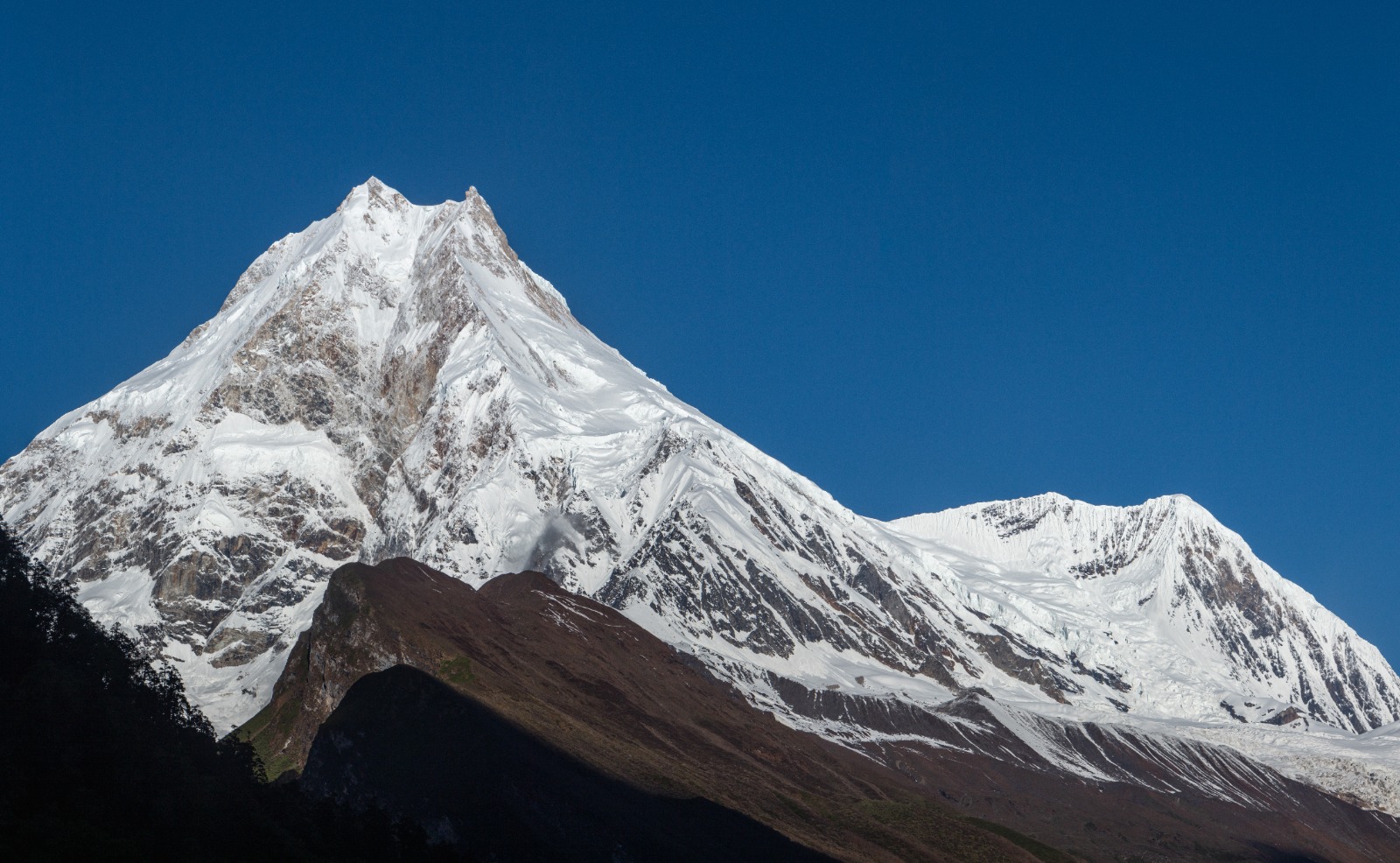
Manaslu, which is sometimes referred to as the “Mountain of the Spirit,” is a mountain in Nepal’s western-central region. Its altitude is 8163 meters (26781 ft.). The term Manaslu derives from the Sanskrit word “Manasa,” which means “Intelligence.” The eight tallest mountains in the world provide uswith incredible life-changing experiences. The Japanese Expedition people made the first ascent of Mount Manaslu on May 9, 1956. They were Gyalzen Norbu and Toshio Imanishi. Even though the area was just opened in 1991, other teams have already examined there.
Up till Bhimthang, the route is comparable to the standard Manaslu Circuit Trek. After negotiating the difficult Larke La Pass in the area of Mount Manaslu, trekkers proceed down the Tilje path in the direction of two renowned villages in the Annapurna region. Two villages with Tibetan populations are Nar and Phu.
Along with its breathtaking vistas, Manaslu offers visitors the chance to explore Buddhist temples, Mani walls, and prayer flags, as well as historical arts. One of the best aspects of this walk is the excellent opportunity to thoroughly examine Tibetan traditions and daily life in the isolated valleys of upper Manang. Visit some of Kathmandu’s stunning, artistic, and architectural world heritage sites.
Similarly, hiking through the Manaslu and Nar Phu basins takes us to several glacier valleys and towns that are remarkably unspoiled and uninhabited. We pass a lot of isolated communities like Samagaon and Samdo as well as valleys like Marsyangdi and the Gandaki riverbank. Although Nar and Phu Valley are prohibited places, it is possible to trek there with special authorization. Here, we can discover themagnificent mountain vistas. Mansiri 7187m (23579 ft.), Himalchuli 7893m, Ganesh Himal 7422m (24350 ft.), and Annapurna 8081m (26512 ft.) are a few of them (25895 ft.). as well as Tibetan culture, people, the customs, values, and ceremonies.
Highlights:
- Remote and adventurous: The trek takes you through a less-traveled region, offering a sense of exploration and adventure.
- Majestic Manaslu: Witness the stunning beauty of Manaslu, the eighth tallest mountain in the world, standing at 8163 meters.
- Cultural immersion: Immerse yourself in the unique customs and traditions of the Tibetan people, influenced by Tibetan culture.
- Buddhist heritage: Explore ancient Buddhist temples, Mani walls, prayer flags, and historical art, revealing the rich religious heritage of the area.
- Secluded valleys: Trek through isolated glacier valleys and towns, experiencing untouched landscapes.
- Nar and Phu villages: Visit picturesque Tibetan villages, once restricted areas, now accessible with special authorization.
- Diverse landscapes: Encounter varied terrains, from high mountain passes to lush green valleys, creating a fulfilling trekking experience.
- Glacial rivers: Cross numerous glacial rivers like Marsyangdi and Gandaki, enhancing the scenic beauty of the trek.
- Breathtaking mountain views: Enjoy the sight of Himalchuli, Ganesh Himal, Annapurna, and more, delighting mountaineering enthusiasts.
- Kathmandu heritage sites: Explore stunning world heritage sites in Kathmandu, adding a cultural dimension to your journey
Best Season
Although Nepal is a tourist hotspot all year round, the ideal times to hike in the Manaslu area are in the spring (March to May) and fall (mid-Sept to mid-Dec). Trekking in the fall is renowned for its bright skies and stunning views of the glittering peaks against the turquoise sky. As December draws to a close, the temperature drops. Any month, with the exception of January, February, June, and July, is suitable for this expedition.
Acclimatization
Despite having excellent physical fitness, any hiker can get altitude sickness while hiking at a high altitude. Giving yourself enough time to properly acclimatize for your hike is crucial. The trekkers will have adequate time to acclimatize thanks to the itinerary’s steady ascent in height, which was devised by Sunrise Adventure Trek. Preventing AMS involves hiking carefully, especially at high altitudes (Acute Mountain Sickness).
Anyone experiencing symptoms such as lightheadedness, palpitations, severe headaches, or loss of appetite will be relocated to a lower altitude right away or, in the case of severe AMS, arrangements will be made for a helicopter rescue, with the customer bearing the cost.
Meals (Breakfast, Lunch, Dinner)
During the Round Manaslu trek, trekkers receive three meals per day (breakfast, lunch, and dinner). They can eat a variety of foods, including traditional Nepali fare and several sorts of international cuisine (Continental, Nepalese, and Indian.). Unlike other trekking organizations.
Manaslu Expert provides trekkers to select their meals from the hotel/lodge menus. Most establishments will offer a set menu if the gathering is too large for the hotels or lodges to serve individual dishes. We use hotels and lodges that provide sanitary, nourishing, and tasty cuisine for trekkers so they have the energy to hike.
Accommodation
In Kathmandu, you will stay in 3-star accommodations. We will be staying in lodges/teahouses along the tour. Lower elevations may have more pleasant and higher-quality teahouses. It should be indicated that the quality of lodging may be lower at higher elevations, with more basic accommodations with the essential amenities.
Travel Insurance
Trekkers must have travel coverage to protect all potential costs, including those resulting from accidents or medical concerns (concludes helicopter rescue, and medical treatment costs). Trekkers must purchase travel insurance by one of the international insurance firms because Nepali insurance companies do not offer travel insurance for foreigners.